200–350 mesh fineness · 200–300 kg/h capacity · Stable structure, European-level quality
1. Project Background
In Japan, the market for green juice (aojiru) and plant-based health powders is well established, with very strict expectations on mouthfeel, color and nutritional retention.
For this project, our Japanese customer – a health food manufacturer – needed to process dried wheatgrass into a fine powder that would serve as the primary ingredient in their green juice products.
Their core requirements were clearly defined:
Raw material: dried wheatgrass
Product use: main powder component of green juice
Target fineness: 200–350 mesh, smooth and easy to dissolve
Capacity: 200–300 kg/h continuous production
To meet these targets, the customer decided to introduce a dedicated wheatgrass pin mill, integrated into their existing green juice production line.
2. Customer Profile & Application
Customer type:
A Japanese health food company focused on:
Green juice powders;
Nutritional meal replacements;
Plant-based functional drink powders.
Application scenario:
Upstream, the customer has already completed washing, drying and basic pre-treatment of wheatgrass;
The new machine is dedicated to fine grinding wheatgrass to 200–350 mesh, supplying the green juice blending and packaging sections;
The final powder must have uniform particle size, good dispersibility and a clean green appearance, suitable for small sachets and can filling.
3. Our Solution (Equipment & Process)
After analyzing the required fineness, capacity and line layout, we supplied:
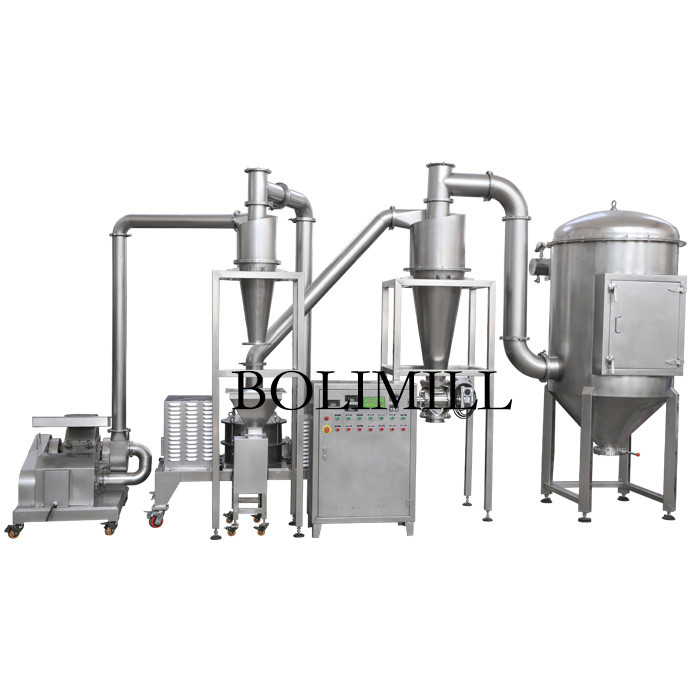
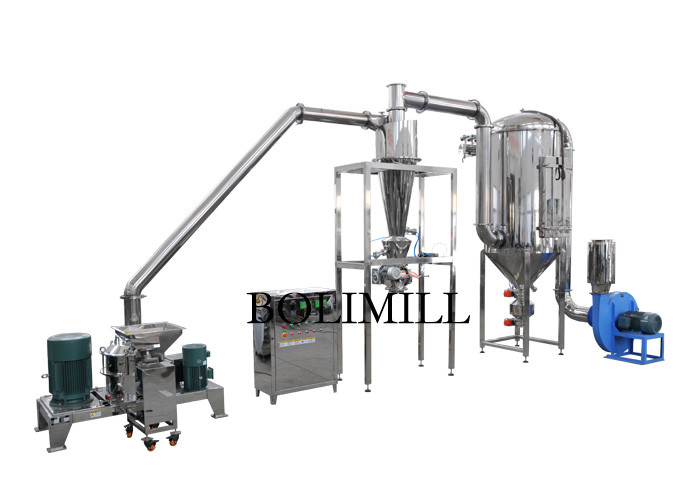
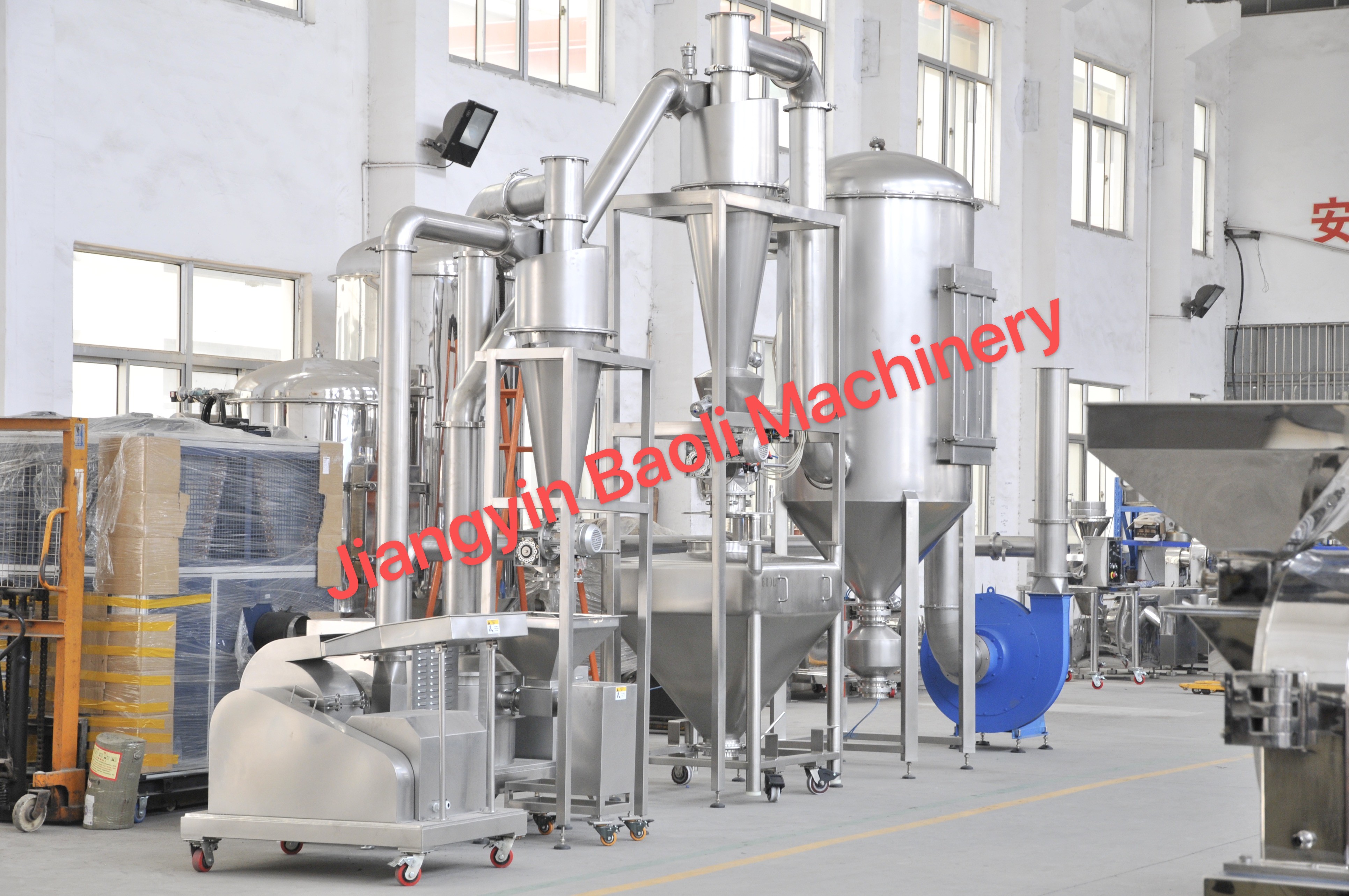
JB-350 Wheatgrass Pin Mill
Designed for 200–350 mesh, with a capacity of 200–300 kg/h
(1) Pin Mill Design Optimized for Fibrous Wheatgrass
The JB-350 uses a high-speed pin mill (impact) grinding principle, allowing the fibrous wheatgrass to be efficiently reduced by impact and shear;
The clearance between rotor and stator is adjustable, enabling the customer to tune fineness within the 200–350 mesh range according to different product recipes;
The design is well suited for low-density, high-fiber plant materials, ensuring stable, continuous grinding without frequent clogging.
(2) Stable Structure with “European-Level” Quality Feel
The JB-350 frame and housing are designed for high rigidity, resulting in low vibration and low noise during operation;
The drive and main shaft are selected with a generous safety margin for long-term continuous duty;
Key components are machined and assembled to high precision, following a design philosophy that aligns with European machinery standards – a point that was especially appreciated by the Japanese customer.
(3) Easy Cleaning & Maintenance for Food Applications
The grinding chamber interior is smooth and easy to clean, reducing product build-up and cross-contamination between batches;
The pin discs are designed for convenient removal and reinstallation, shortening maintenance and cleaning downtime;
The overall layout takes into account typical Japanese factory constraints, allowing the mill to be integrated smoothly into the existing green juice production line.
4. Key Technical Data (Overview)
Item
Specification
Destination
Japan
Model
JB-350 Wheatgrass Pin Mill
Raw material
Dried wheatgrass
Final product use
Main powder component of green juice products
Target fineness
200–350 mesh
Reference capacity
Approx. 200–300 kg/h
Grinding principle
High-speed pin mill (impact grinding)
Main features
Stable structure, low vibration, easy cleaning, “European-level” quality
5. Final Testing & Customer Acceptance
Once installed at the Japanese plant, the JB-350 underwent several rounds of final testing with the customer’s actual wheatgrass material:
Under the specified operating conditions, the mill consistently produced powder within the 200–350 mesh range, with a narrow particle size distribution;
The resulting powder showed a bright green color, minimal visible coarse fiber, and very good dispersibility in water – meeting the customer’s internal standards for green juice base powder;
During continuous operation, the machine ran smoothly with stable current, low vibration and reliable safety interlocks.
After the full test program, the JB-350 wheatgrass pin mill successfully passed the customer’s on-site acceptance and was officially released into production.
6. Conclusion
The JB-350 wheatgrass pin mill delivered to Japan was engineered around four core expectations:
200–350 mesh fine grinding, 200–300 kg/h stable capacity, robust structure, and a quality level comparable to European machines.
In practice, the mill has provided the customer with:
Reliable, controllable fine grinding capability for their green juice raw material;
Improved consistency in powder fineness and appearance, supporting a premium product image;
A solid equipment foundation for future expansion of plant-based and green health products.
For other manufacturers producing green juice powders or plant-based health powders, this type of pin mill specifically tuned for fibrous plant materials is a proven step up from lab-scale or general-purpose grinders to stable, industrial-scale production.
Vertical mixer for meat seasoning · Dust-free feeding · Automated mixing & screening
1. Project Background
In Russia, demand for sausages, smoked meats and processed meat products remains strong, and the market is increasingly focused on flavor consistency and hygiene.
Traditional spice preparation for sausages often relies on:
Manual weighing and dumping of spices;
Small stand-alone mixers with limited capacity;
Open feeding and handling, leading to high dust levels and inconsistent mixing.
These methods not only create a dusty working environment and high labor intensity, but also make it difficult to keep seasoning ratios and mixing uniformity stable from batch to batch – directly affecting the final sausage flavor.
For this project, our Russian customer decided to install a dedicated spice mixing line for meat marination, aiming to:
Standardize the entire pre-processing of sausage seasoning – from dust-free feeding, mixing, to screening – with a highly automated, dust-controlled solution.
2. Customer Profile & Application
Customer type:
A professional meat processing company in Russia, specializing in:
Cooked and smoked sausages;
Ham and cured meat products;
Ready-to-cook marinated meat products for retail and food service.
Line application:
The line is dedicated to mixing compound spices used for meat marination, specifically for sausage production;
The mixed seasoning is used in downstream processes such as sausage stuffing, tumbling/massaging and curing;
The customer’s key expectations are:
Stable flavor and spice distribution from batch to batch;
Clean, dust-controlled environment suitable for meat plant hygiene requirements;
Automated process flow to reduce manual handling and improve efficiency.
3. Our Solution (Process Flow & Equipment Configuration)
Based on the customer’s plant layout, process requirements and existing upstream dosing system, we supplied a complete:
Dust-Free Feeding → Vertical Mixing → Screening → Finished Spice Discharge
automatic spice mixing and screening line for sausage seasoning.
(1) Dust-Free Feeding System
A dust-free feeding station is installed for bag opening and raw material input;
Local extraction and dust collection capture spice dust generated when bags are opened and emptied, returning collected material into the product stream;
This significantly reduces dust escape at the feeding point, improves operator working conditions and minimizes material loss.
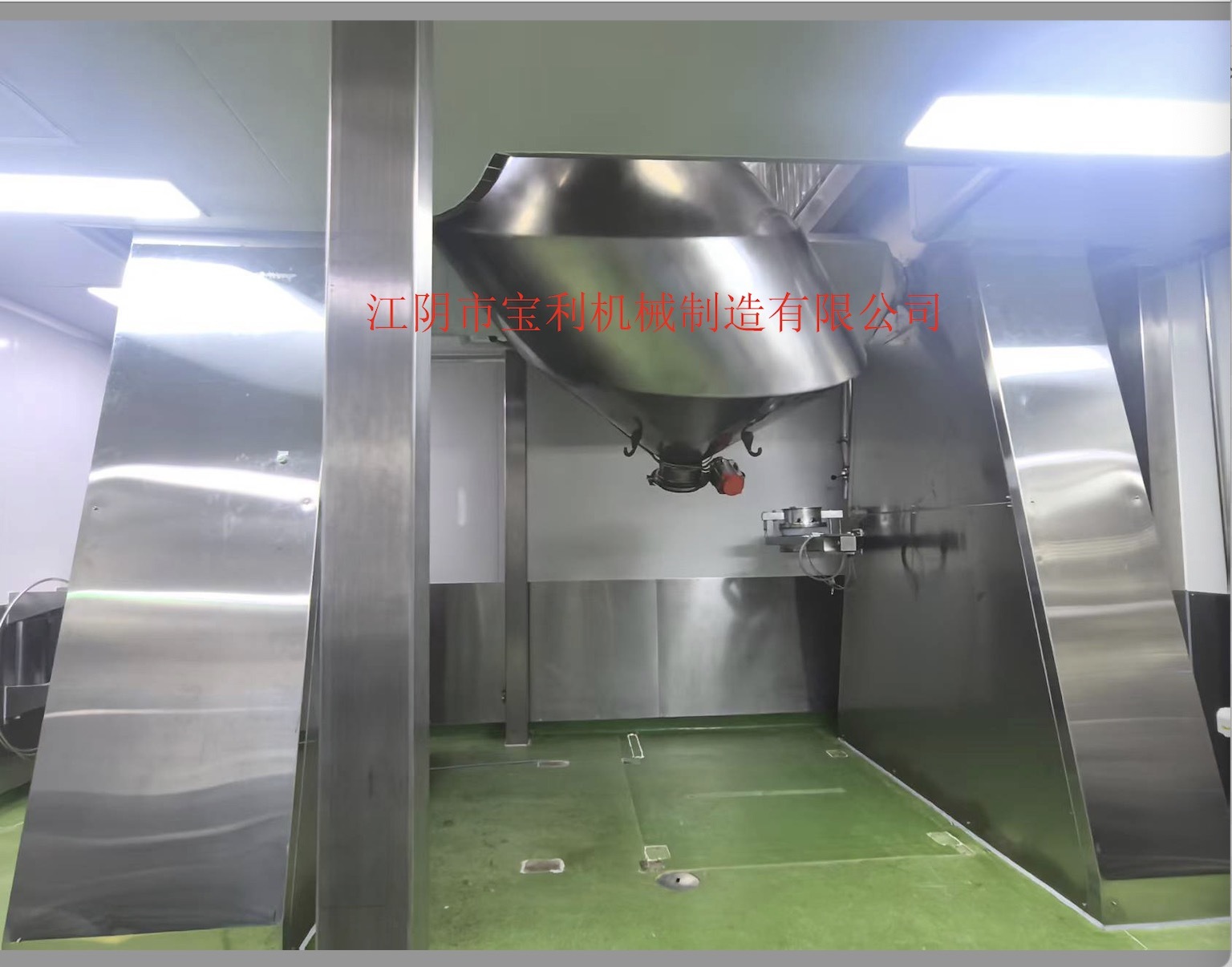
(2) Vertical Mixer – Dedicated to Sausage Seasoning
A vertical mixer is used as the core mixing unit, ideal for blending multi-component spice mixtures with different particle sizes and densities;
The mixing flow pattern creates a strong vertical circulation of material, giving good movement to:
Coarser particles (e.g., pepper granules, herb flakes);
Finer spice powders and salt;
Internal walls feature rounded corners and a bottom design with minimal dead zones, reducing residual seasoning and cross-contamination between recipes.
(3) Automated Screening & Finished Product Handling
After mixing, the seasoning is automatically fed to the screening unit;
Oversized particles, foreign bodies or agglomerates are removed, leaving a uniform particle size distributionsuitable for even coverage and dispersion in meat;
Depending on the customer’s process, the screened seasoning can be:
Directly transferred to the sausage production area; or
Sent to automatic weighing and packaging for intermediate storage.
4. Key Line Features & Technical Highlights (Excerpt)
Item
Description
Destination
Russia
Application product
Compound spices for meat marination, used in sausage production
Core equipment
Vertical mixer + dust-free feeding station + screening unit
Process flow
Dust-free feeding → vertical mixing → screening → spice discharge
Operation mode
Automated batch/continuous operation with minimal manual handling
Hygiene & environment
Enclosed conveying, local dust extraction, reduced airborne dust
Mixing focus
Uniform multi-spice blending, low residue, stable flavor profile
5. Delivery Status & Customer Expectations
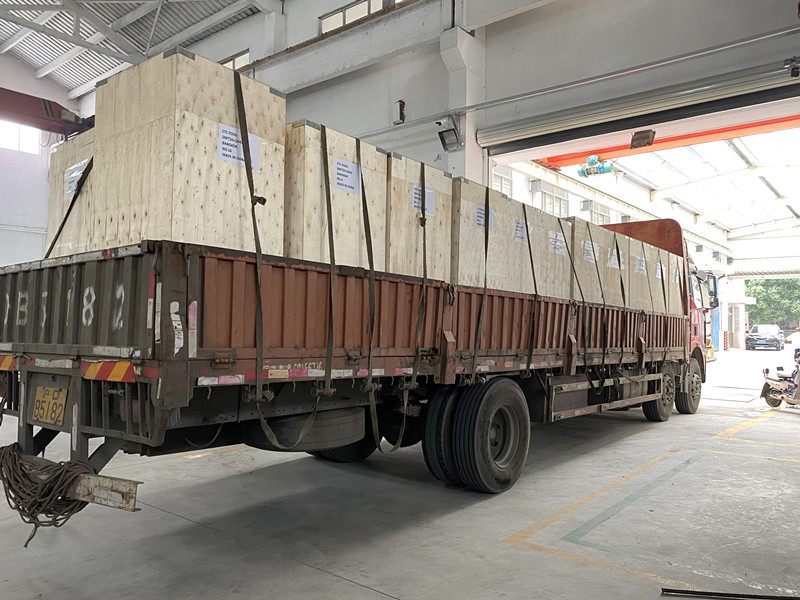
The complete mixing and screening line has arrived at the Russian customer’s plant and is now ready for installation and commissioning.
During design and pre-delivery communication, the customer emphasized several expectations:
Standardized spice pre-processing for stable sausage flavor
By combining fixed recipes with vertical mixing and screening, seasoning is transformed into a controlled intermediate product, reducing reliance on “manual feel” and experience-based mixing.
Reduced manual work and cleaner environment
Dust-free feeding and automatic mixing/screening are expected to lower physical workload (less bag lifting and open dumping) and reduce operator exposure to spice dust, creating a more comfortable and professional working environment.
Stronger foundation for future capacity expansion and new products
A dedicated seasoning line allows the plant to scale up production and develop new sausage flavors more easily, simply by adjusting recipes while keeping the same standardized mixing and screening process.
6. Conclusion
This dust-free spice mixing & screening line for sausage production in Russia is designed around four core goals:
Cleaner environment, more uniform seasoning, higher automation, and more stable sausage flavor.
Through an integrated process of dust-free feeding → vertical mixing → screening, the system will help the customer to:
Supply sausage production with consistent, reproducible seasoning blends;
Reduce dust and manual handling risks in the spice preparation area;
Move from “experience-based, manual mixing” to standardized, automated seasoning production, creating a stronger foundation for brand reputation and market competitiveness.
TÜV Rheinland CE certified · 5 minutes per batch · High-efficiency mixing with full flavor retention
1. Project Background
In Italy, manufacturers of flavored food powders, essential-oil-based blends and functional nutrition powders place very high demands on both flavor retention and mixing efficiency.
Traditional general-purpose mixers often struggle in this application:
Essential oils are not evenly dispersed – some particles are overly “oily”, while others have almost no aroma;
Long mixing times cause batch-to-batch variation and limit throughput;
Open or poorly sealed designs promote aroma loss and make cleaning more difficult.
This Italian customer wanted to upgrade to a mixer dedicated to “powder with essential oil addition”, and clearly specified:
The mixer must be CE certified by TÜV Rheinland, achieve about 5 minutes per batch, and maximize retention of essential oil flavor and activity while delivering high efficiency.
2. Customer Profile & Application
Customer type:
An Italian food and nutrition manufacturer producing:
Instant drink powders containing essential oils (lemon, orange, herbal flavors, etc.);
Flavored bakery premixes and compound spice blends;
Functional solid beverages where essential oils are combined with nutrients as key value points.
Application characteristics:
Essential oils are added at low dosage but have a huge impact, so they must be very evenly dispersed in the powder;
The mixing process must stay gentle, with low temperature rise, to avoid evaporation and degradation of aromatic and active components;
Multiple batches per day with frequent recipe changes, so short batch time and quick cleaning/changeover are critical.
3. Our Solution (Configuration & Process Features)
After fully understanding the formulation system (carrier powders + essential oils + minor ingredients) and the plant’s hygiene standards, we supplied:
A high-efficiency essential oil powder mixer
TÜV Rheinland CE certified, achieving one batch in about 5 minutes.
(1) TÜV Rheinland CE-Certified Safety & Compliance
The mixer has passed CE certification by TÜV Rheinland, complying with EU Machinery Directive and relevant electrical safety standards;
Safety guards, emergency stops and interlocks are all integrated, making it easier for the customer to meet internal EHS requirements and third-party audits.
(2) Mixing Structure Optimized for “Powder + Essential Oil”
The mixing element provides a combination of intensive powder tumbling and gentle shear, helping the essential oil form a thin, even coating on powder particles instead of creating oily lumps;
Internal flow patterns have been engineered so that target homogeneity is reached in about 5 minutes per batch, significantly increasing line productivity;
All product-contact surfaces are polished to reduce essential oil residue and build-up.
(3) Flavor Retention & Volatility Control
The mixing chamber uses a semi-closed / closed design to minimize aroma escape during mixing;
The mixer operates with controlled intensity and time to avoid unnecessary frictional heating, better preserving natural aroma and active components in the essential oils;
Well-suited for temperature- and oxidation-sensitive oils, such as citrus and delicate herbal essential oils.
4. Key Technical Data (Excerpt)
Item
Specification
Destination
Italy
Equipment type
High-efficiency essential oil powder mixer
Certification
CE certified by TÜV Rheinland
Typical products
Essential-oil instant drink powders, flavored premixes, compound spice blends
Batch mixing time
Approx. 5 minutes per batch
Mixing features
Uniform oil dispersion, low temperature rise, strong flavor retention
Construction
Stainless-steel product-contact parts, polished, easy to clean
Safety & control
EU-compliant electrical and safety design with E-stop and interlocks
5. Initial Customer Feedback
After installation and commissioning at the Italian plant, the customer reported very positive results during trial and early production:
More uniform essential oil distribution and stable flavor
Finished powders show much more consistent aroma intensity and taste across batches;
Downstream customers and internal QA both confirm that “flavor is more stable and predictable.”
5-minute batches significantly boost capacity
While maintaining the required quality, the mixing cycle has been shortened from well over ten minutes to about 5 minutes per batch, clearly increasing throughput;
This gives the customer more flexibility to handle peak orders and manage multiple SKUs.
Reduced aroma loss and better product perception
Noticeable aroma “escape” in the production room has been reduced;
Finished products now present a stronger, more focused aroma on opening, helping to elevate the perceived quality of the brand.
6. Conclusion
This high-efficiency essential oil powder mixer exported to Italy, CE certified by TÜV Rheinland, successfully combines in one machine:
Gentle handling that protects essential oil flavor and active compounds;
High efficiency with around 5 minutes per batch;
Full compliance with EU safety and hygiene requirements.
For European food and nutrition manufacturers who need to add essential oils into powders and who care about both high productivity and premium flavor, this type of “high-efficiency + gentle processing” dedicated mixer is an ideal solution to upgrade product quality and production performance.